The short version
A useful starting point
Finding sources to inspect. A search answer may combine reporting from different dates or contexts. The linked page, rather than the answer wording, should support a published claim.
A good fit if…
A research question where discovering relevant pages is the first job and you can inspect the resulting sources.
Look elsewhere if…
You want to publish search answers without opening their sources or need a guarantee that every citation supports its adjacent sentence.
Perplexity presents search-based answers with source citations. Its Pro Search documentation describes deeper searches and linked sources for checking the response.
The useful buying question is whether this fits your recurring work. A research question where discovering relevant pages is the first job and you can inspect the resulting sources.
Where it earns a place in the workflow
Think of the first answer as a research map. It may help you discover terminology, relevant organisations and pages worth opening. The buying decision should depend on how well that map supports your questions, not on how complete the initial paragraph sounds. A source list is valuable only when the pages are relevant and the claims survive inspection.
For product research, keep a row for each feature you intend to mention. Record the official page that establishes it, the date checked and the applicable edition. If most of your time is spent untangling citations that do not support the claim, the workflow needs improvement. If the search regularly leads you to useful primary material, you have a concrete reason to keep using it.
A trial you can judge for yourself
Ask a narrow question about an openly documented software feature. Open each cited source and record which sentence it supports, its date and any plan limitation.
Look for this result: You can trace each intended claim to a relevant primary source without treating a search summary as the evidence.
This is a proposed evaluation using permitted or fictional material, not a report of a completed hands-on test.
The trade-off to keep in view
A search answer may combine reporting from different dates or contexts. The linked page, rather than the answer wording, should support a published claim.
Before choosing a plan
Which search features, file options and usage limits are included, and do they address the research questions you actually repeat?
Record the result of your trial, the corrections you made and the current terms that matter to your use. Keep the tool only if the finished output and review effort justify adding it to your work.
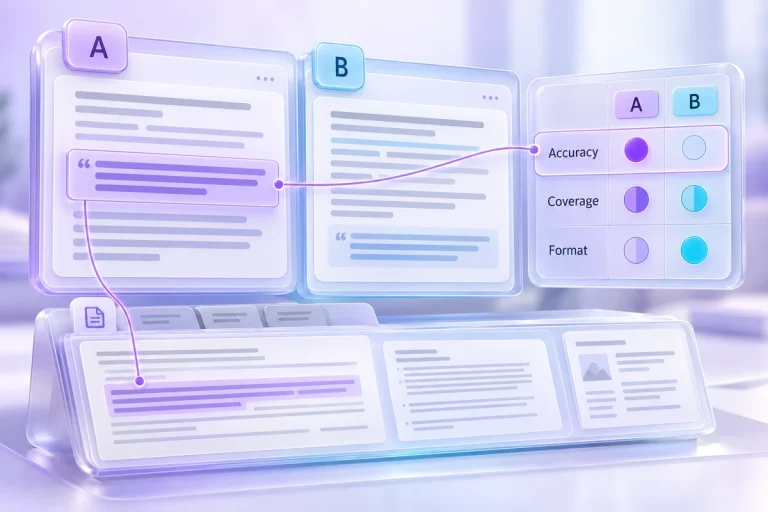
Keep the inputs and review notes together in the Response Compare Pad, then save a backup you can reopen.
Strengths
- Perplexity presents search-based answers with source citations. Its Pro Search documentation describes deeper searches and linked sources for checking the response.
- Finding sources to inspect.
Limitations
- A search answer may combine reporting from different dates or contexts. The linked page, rather than the answer wording, should support a published claim.
- Which search features, file options and usage limits are included, and do they address the research questions you actually repeat?