
You do not need to redesign your working day to find a useful role for AI. A better first experiment is a small job with an answer you can inspect. You should know what you are giving the tool, what you want back, and what would make the result unacceptable. That makes the experiment informative even when the output disappoints you.
Start with work you understand Choose a task you already know how to do. You might turn a short project note into an update, reorganise a list of questions, or extract dates from a document. Avoid beginning with a subject where you cannot recognise an error. A polished explanation can feel useful simply because it is easier to read than the source.
For a first attempt, use material you own and are comfortable putting into the chosen service. A fictional example is often enough. You can learn whether a workflow is promising before involving a customer document or a private team discussion.
Define the smallest finished result Imagine a fictional community workshop. The source note says the session is on 18 November, starts at 10 am, lasts 90 minutes, and has six places remaining. The room has not been confirmed. Your task is to draft a short reminder for people who have already registered.
That is a bounded assignment. The output should remind existing attendees about the date and time, mention that the room will be confirmed separately, and avoid asking them to book again. It should not invent parking instructions, a host biography or a cancellation policy. Write those conditions down before you ask for the draft.
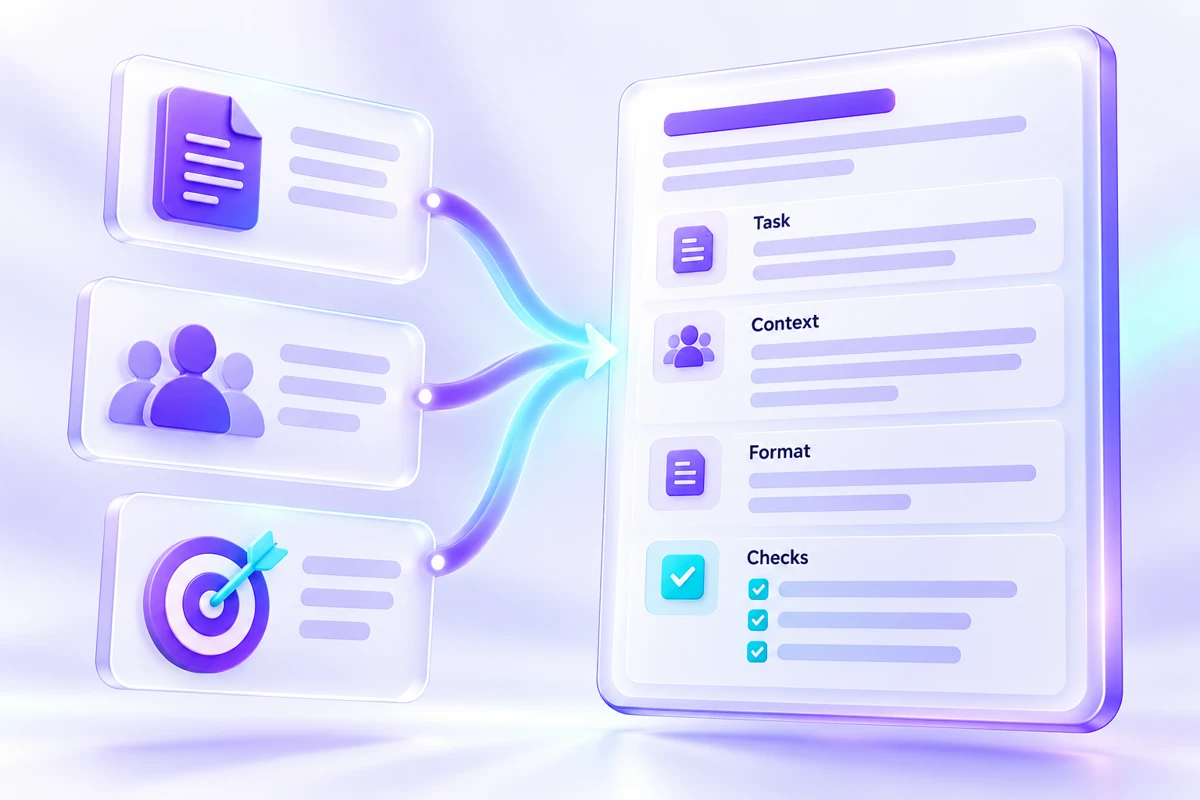
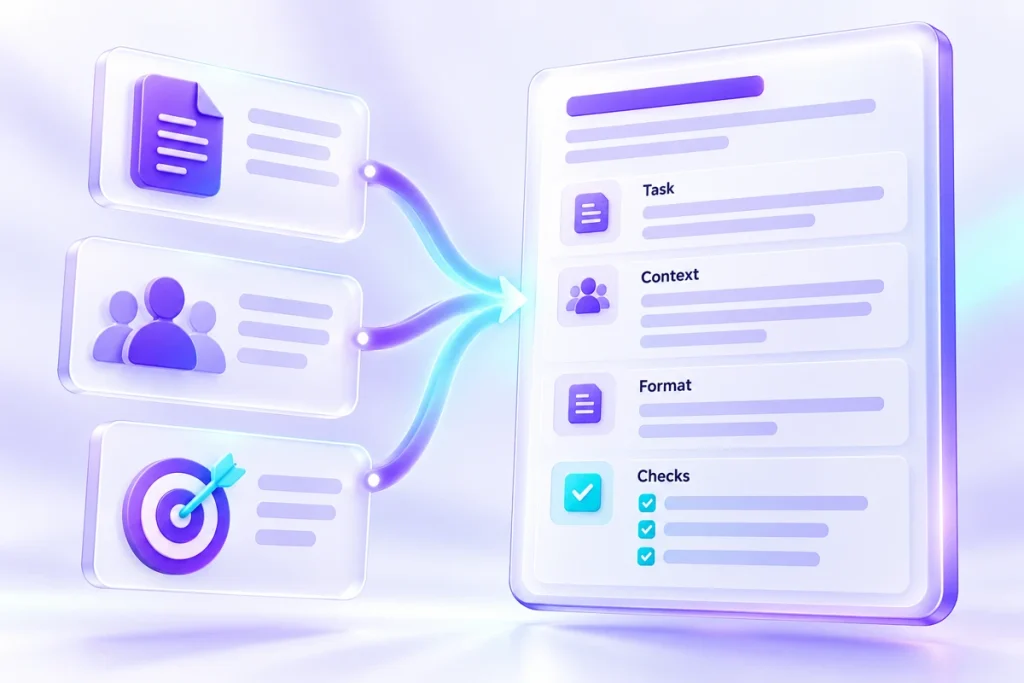
Use a brief rather than a wish Give the assistant four things: the task, the approved facts, the intended reader and the output requirements. For this example, ask for an email of about 100 words with a subject line. State that the room is unknown and must remain unknown. There is no need for a long personality description or a promise that the assistant is an expert.
Keep the original note beside the answer. If the tool asks a useful question, record it. Missing input is a finding about the workflow, not a failure that needs to be hidden with more instructions.
Review in a fixed order First check the date, time and duration. Then check the room statement and the audience. Finally, read the tone and remove anything you would not normally say. This order matters: an appealing sentence should not distract you from a wrong event date.
Record the corrections you made. If you changed only one awkward phrase, the draft may have helped. If you rebuilt the whole message, the task may need a better source note, a different tool, or no AI involvement at all. Include checking time when you judge the result.
Repeat once before making it a habit Try the same brief with a second fictional workshop that has a confirmed room and no places remaining. Change the facts, not the entire prompt. You are checking whether the method follows the supplied information rather than remembering the first example.
Keep the prompt, both inputs, the outputs and your correction notes together. That small record is more useful than a general impression that the tool was impressive. Continue only if you can explain what it helps with, where it fails and which checks you will keep doing.
Keep the inputs and review notes together in the task brief builder workspace, then save a backup you can reopen.